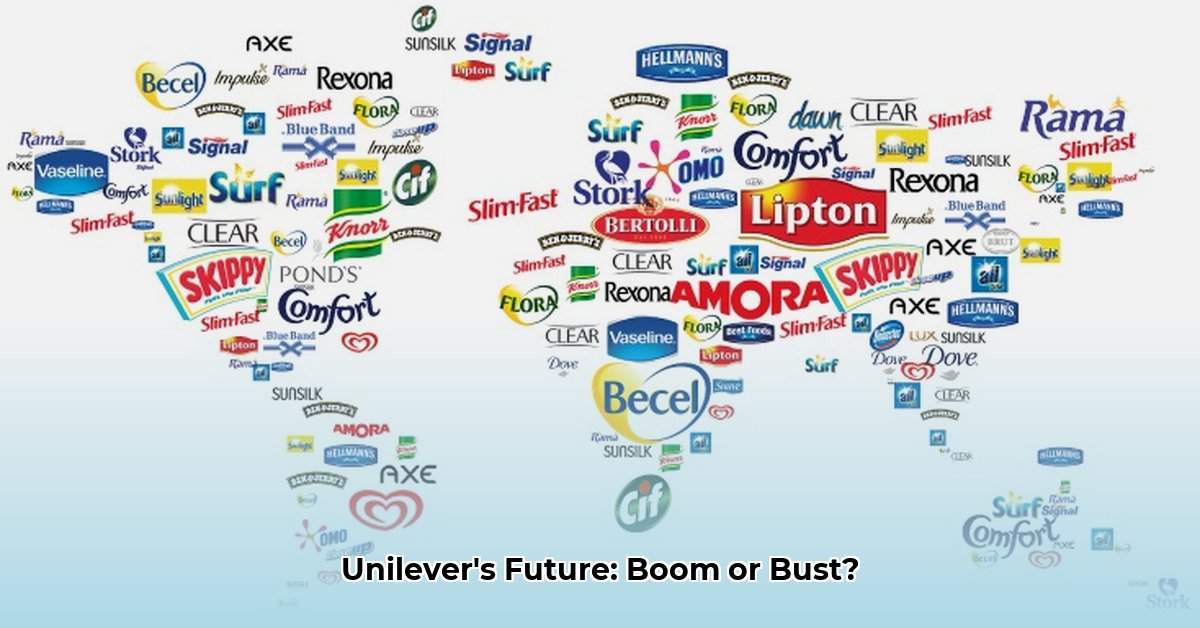
Unilever, the multinational consumer goods behemoth behind iconic brands like Dove, Lipton, and Ben & Jerry's, commands a significant presence in the global marketplace. But how substantial is its net worth, and what factors influence its trajectory? This analysis delves into Unilever's financial standing, exploring the drivers of its success, the inherent risks it faces, and its future prospects.
Unilever's Market Value and Growth
As of April 14th, 2025, Unilever's market capitalization reached a staggering $154.52 billion. This substantial figure reflects a considerable increase compared to previous years, showcasing strong investor confidence in the company's long-term potential. The consistent growth over several decades highlights Unilever's strategic success in navigating the ever-shifting landscape of consumer preferences and market dynamics. However, it's crucial to remember that past performance doesn't guarantee future success; the company operates in a volatile environment. How does this growth compare to other FMCG giants? Further analysis would be needed to assess Unilever’s relative performance within its sector.
Navigating Challenges in a Dynamic Market
While Unilever’s impressive market capitalization points toward success, the company operates within a complex and rapidly evolving environment. Several key challenges impact its growth and profitability:
Supply Chain Vulnerabilities
Global supply chains are inherently vulnerable. Disruptions stemming from geopolitical instability, natural disasters, or pandemics can severely impact production and distribution, directly impacting Unilever's bottom line. The company relies heavily on efficient and resilient supply chains to deliver its products effectively. How does Unilever mitigate this risk? By diversifying its supplier base and leveraging advanced technology, reducing dependency on single suppliers and enabling predictive analysis of potential disruptions.
Evolving Consumer Preferences
Consumer tastes are dynamic, requiring Unilever to continuously monitor trends and adapt its product portfolio. Maintaining relevance necessitates substantial investment in market research and product innovation. How many new products does Unilever launch each year? A comprehensive analysis would detail the company's efforts and success rates.
Fluctuating Raw Material Costs
The cost of raw materials – from agricultural commodities to packaging – fluctuates significantly, impacting profitability. Hedging strategies and exploring alternative resources are crucial for mitigating these risks. What percentage of Unilever's operating costs are attributable to raw materials? A detailed breakdown would better illuminate this aspect of the company's operational challenges.
Environmental Concerns and Sustainability
Unilever's commitment to sustainability – a key component of its long-term strategy – entails considerable investment in environmentally friendly practices. While vital for long-term brand reputation and consumer appeal, this requires addressing the extra costs involved and potential short-term effects on profits. What are the precise financial consequences of Unilever's sustainability commitments? This requires a deep dive into the company's financial reports.
Regulatory Landscape
The regulatory environment, particularly concerning environmental, social, and governance (ESG) standards, is constantly changing. Meeting these requirements mandates proactive engagement and adaptation, potentially impacting operations and costs. How effectively does Unilever navigate this complex regulatory framework? An assessment of its compliance record and its public pronouncements would provide valuable insights.
Stakeholder Perspectives
Different groups hold varied priorities regarding Unilever's performance and direction:
Investors: Primarily interested in short-term profitability, return on investment, and risk assessment, but also long-term growth and the impact of sustainability on brand value.
Management: Focus on operational efficiency, risk management, target achievement, and long-term innovation and market adaptation.
Consumers: Seek high-quality products, ethically sourced materials, transparent practices, and a commitment to sustainable and responsible production.
Regulators: Concentrate on compliance with industry regulations, appropriate reporting standards, and adherence to international environmental and social responsibility guidelines.
Mitigating Supply Chain Risks: A Key to Unilever's Success
Unilever's ability to navigate the complexities of the FMCG supply chain is critical to its continued success. By embracing diversification, leveraging technology for predictive analysis, maintaining agile operations, and fostering strong partnerships, Unilever demonstrates a proactive approach to risk mitigation. This strategy allows the company to withstand disruptions and maintain operational efficiency, ultimately safeguarding its financial stability.
Three Pivotal Points:
- Unilever’s substantial market capitalization reflects long-term investor confidence, but its position is subject to volatile market forces.
- Navigating supply chain vulnerabilities, evolving consumer preferences, and fluctuating raw material costs are critical challenges for Unilever.
- Unilever's commitment to sustainability, while vital for long-term success, requires careful management of associated costs and potential short-term financial impacts.
Conclusion: A Future of Both Promise and Peril
Unilever's journey is one of remarkable achievement, yet it faces considerable challenges. Successfully navigating the complexities of consumer preferences, regulatory environments, and sustainable practices will be critical for its future success. The company's ongoing ability to balance profitability with its commitment to sustainability will determine its long-term trajectory. The road ahead is one of both significant opportunity and considerable risk.